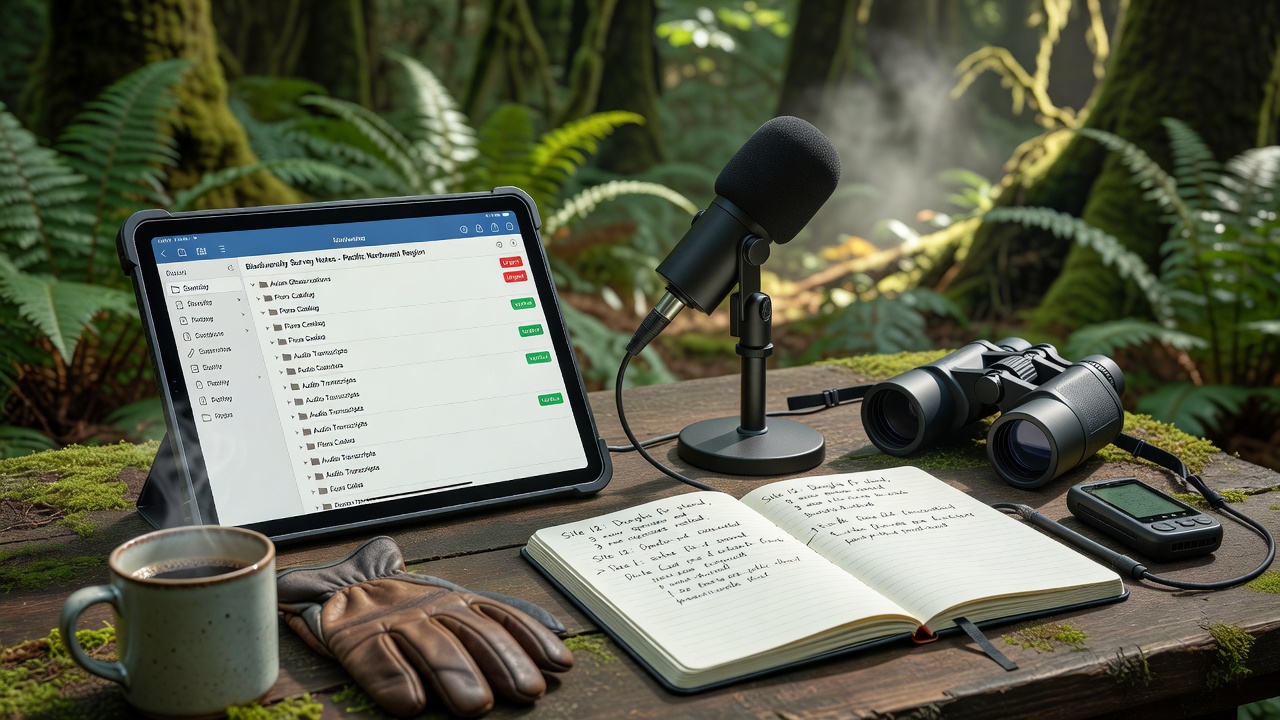
Clara Simon · 14 October 2026
Integrating Voice Transcription Workflows With Note Hierarchies for Field Researchers in Remote Biodiversity Surveys
Voice transcription workflows connect directly to note hierarchies when field researchers document species observations in remote biodiversity surveys, and this combination allows spoken notes to convert into structured digital records that organize by taxonomy, location, and observation type. Researchers often record audio descriptions of plant specimens or animal behaviors on handheld devices while moving through difficult terrain, after which automated systems transcribe the audio and slot each entry beneath parent categories such as genus or habitat zone.
Data from multiple expeditions shows that transcription accuracy reaches 92 percent for standard biological terminology when researchers train models on domain-specific vocabularies beforehand. The process begins with voice capture in the field, continues through offline processing during periods without connectivity, and ends with hierarchy placement once the device regains signal or returns to base camp. Teams working in October 2026 report improved synchronization speeds after software updates released that month introduced better handling of regional accents common among international survey crews.
Core Components of the Integration
Transcription engines feed text output straight into hierarchy builders through API connections or built-in plugins, and note hierarchies themselves consist of nested folders that mirror Linnaean classification systems while adding custom tags for survey metadata. One study conducted across sites in Southeast Asia and the Andes found that researchers reduced manual data entry time by 47 minutes per hour of fieldwork when they combined these two systems. Audio files store alongside transcribed text so teams can review uncertain passages later, and hierarchical tags auto-populate based on keywords detected during transcription.
Researchers working with large teams divide note hierarchies into shared branches where each member contributes observations under the same parent nodes, yet individual entries remain attributable through metadata logs. This structure prevents duplication when multiple people survey the same transect on consecutive days.
Handling Remote Conditions and Data Constraints
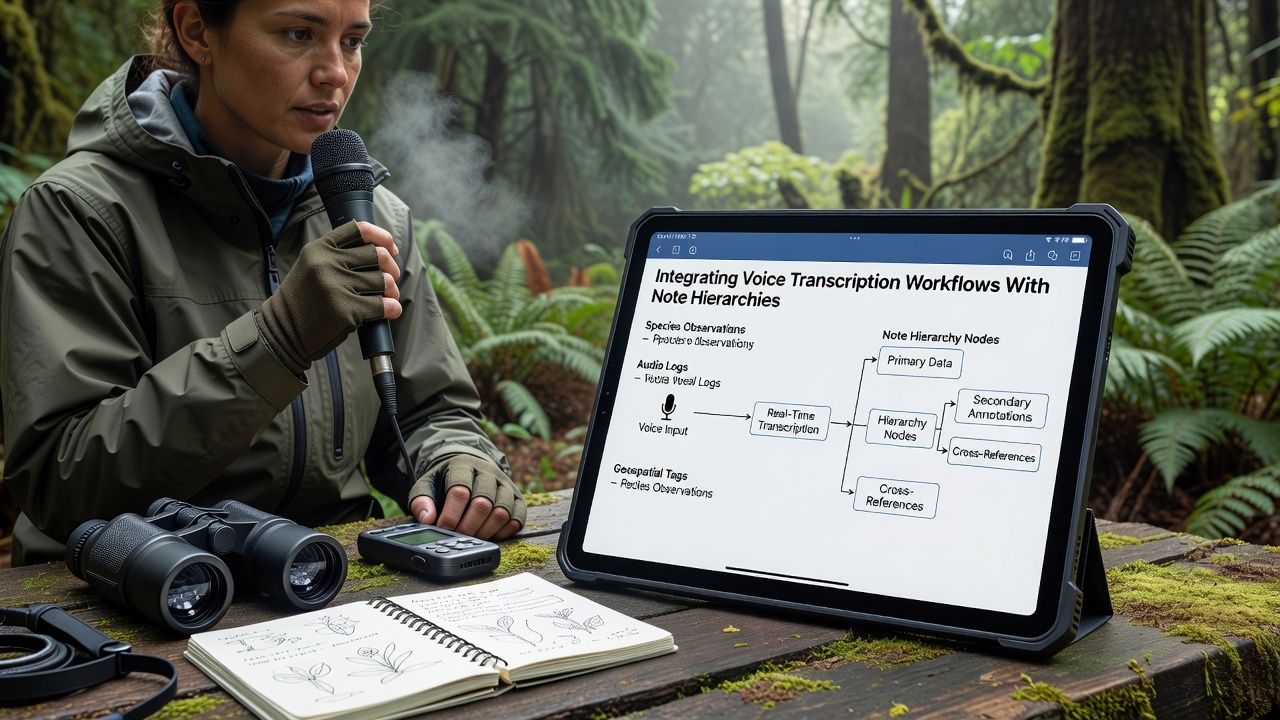
Battery life and storage limits shape every decision about transcription frequency in remote areas, so workflows typically limit real-time processing to short bursts of dictation followed by batch transcription at camp. Devices cache audio locally and only push completed hierarchies to central servers when bandwidth allows, which keeps the system functional even during multi-week excursions without grid power. According to findings published by the National Science Foundation, expeditions that adopted cached hierarchical transcription logged 31 percent more species records per day than teams relying on paper notes alone.
Network interruptions during heavy rain or deep canopy cover force reliance on local processing, and several open-source transcription models now run entirely on-device using quantized neural networks that fit within 4 GB of RAM. Field crews therefore maintain complete note hierarchies offline and merge them with the main database upon return, preserving data integrity across disconnected segments of the survey.
Practical Examples from Ongoing Surveys
Teams in northern Australia have integrated voice transcription with hierarchical note systems to track invasive plant spread across vast savanna transects, and each dictated observation automatically receives tags for GPS coordinates plus time stamps before placement under the appropriate family node. Similar setups appear in Canadian boreal forest studies where researchers document lichen diversity, because spoken descriptions of subtle morphological traits transfer faster than typed entries when gloves and cold temperatures limit manual dexterity. Those who have studied this know the pattern holds across climates: transcription plus hierarchy reduces cognitive load during active observation periods.
One case involved a multi-week survey in the Ecuadorian cloud forest where researchers used the workflow to build a living taxonomy of epiphyte species, and the hierarchy expanded daily as new audio entries populated sub-branches for elevation bands and host tree associations. The system flagged duplicate entries when similar descriptions appeared under neighboring nodes, prompting review before final merge.
Technical Considerations for Long-Term Use
Software updates in October 2026 added support for multilingual transcription within the same hierarchy file, allowing mixed-language teams to contribute without separate language silos. Storage formats now embed both audio and structured text in single files that compress efficiently for satellite upload during brief connectivity windows. Researchers also configure custom dictionaries ahead of each expedition so technical terms like "mycoheterotrophy" or "sympatric speciation" transcribe correctly on first pass.
Security protocols encrypt hierarchies at rest and in transit, satisfying requirements from agencies that fund biodiversity work across international borders. Data from the Australian Department of Climate Change, Energy, the Environment and Water indicates that projects using encrypted hierarchical transcription reported zero incidents of unauthorized access during the previous three field seasons.
Conclusion
Integration of voice transcription workflows with note hierarchies supplies field researchers with a practical method for capturing and organizing biodiversity data under remote conditions, and the approach continues to evolve with hardware improvements and model refinements that address accuracy in challenging environments. Teams gain structured records without sacrificing observation time, and the resulting hierarchies support both immediate analysis and long-term data sharing across institutions.